Finding a balance between health requirements and budget constraints is a common challenge for many consumers today, especially those searching for cheap gluten free snacks. As gluten-free diets transition from a medical necessity for celiacs to a lifestyle choice for health-conscious individuals, the demand for affordable, tasty, and safe alternatives has skyrocketed globally.
The snack industry has evolved significantly, moving beyond bland rice cakes to innovative puffed corn and popcorn variations that satisfy cravings without breaking the bank. Whether it is a quick office treat or a child's school snack, the availability of budget-friendly, gluten-free options ensures that dietary restrictions do not lead to financial strain or nutritional compromise.
In this comprehensive guide, we explore how the manufacturing of puffed snacks—ranging from honey butter popcorn to savory salt and lemon corn—provides a sustainable pathway to accessing cheap gluten free snacks. By understanding the production process and ingredient sourcing, consumers and distributors can make informed decisions that prioritize both wellness and economy.
Global Demand for Affordable Gluten-Free Options
The global market for gluten-free products has seen an exponential rise, driven by a growing prevalence of celiac disease and non-celiac gluten sensitivity. According to industry trends and health data, millions of people worldwide are forced to avoid wheat, barley, and rye, often finding that "specialty" foods come with a prohibitive price premium. This has created a critical need for cheap gluten free snacks that do not sacrifice taste or safety.
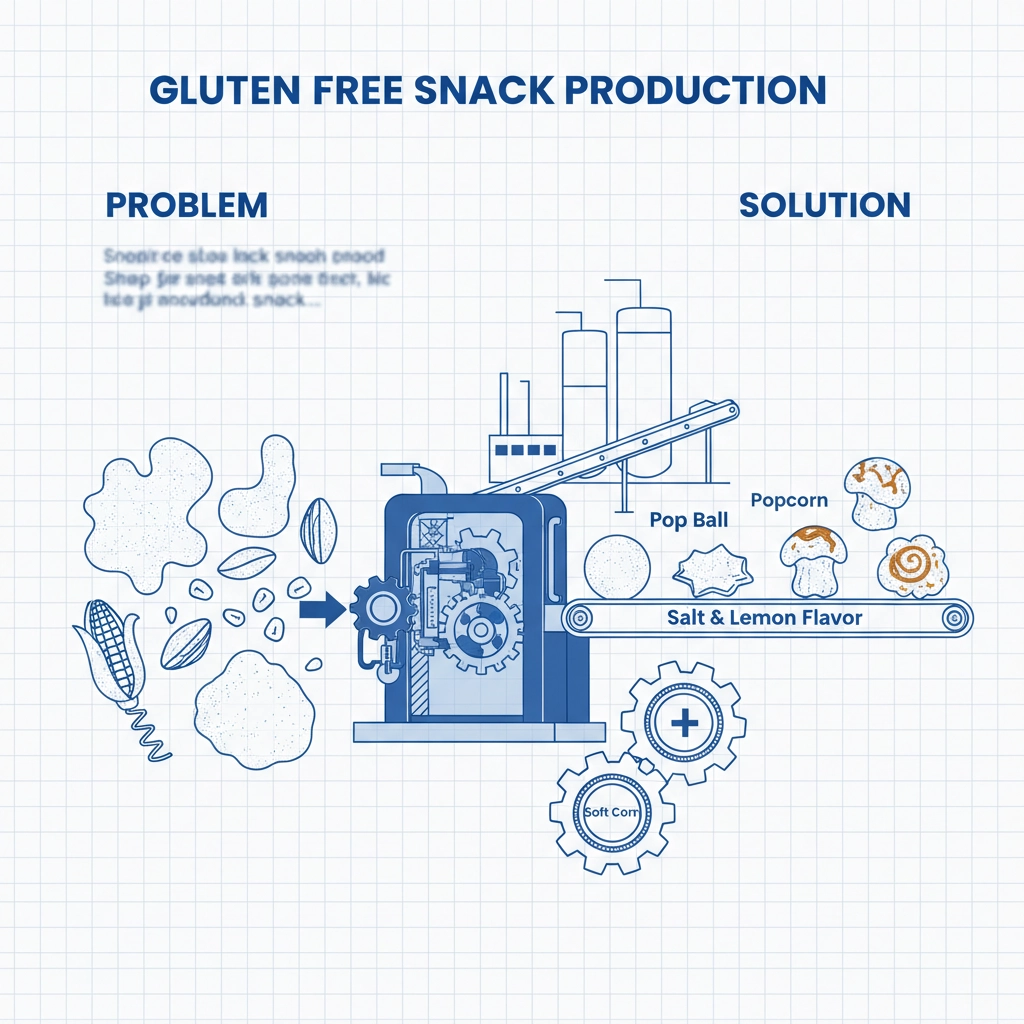
Manufacturing efficiency in the puffed food sector, particularly with corn-based products like Pop Balls and Soft Corn, has allowed producers to lower the entry barrier for these dietary needs. By leveraging high-yield crops and automated extrusion technology, the industry is now capable of delivering nutrient-dense, gluten-free alternatives at a price point accessible to the general population, regardless of socioeconomic status.
Defining the Value of Cheap Gluten Free Snacks
When we discuss cheap gluten free snacks, the term "cheap" should not be equated with "low quality." Instead, it refers to cost-efficiency achieved through smart sourcing and streamlined manufacturing. In the context of puffed snacks, this means using naturally gluten-free bases like maize or corn, which are globally abundant and inherently affordable, rather than expensive synthetic substitutes.
From a humanitarian perspective, affordable gluten-free options are a matter of health equity. For individuals in lower-income brackets, the "gluten-free tax"—the higher cost associated with GF certified foods—can lead to nutritional deficiencies. Providing budget-friendly options like Caramel or Honey Butter popcorn ensures that everyone has access to safe, satisfying snacks that adhere to their medical requirements.
Ultimately, these snacks bridge the gap between gourmet dietary trends and essential health needs. By focusing on simple ingredients and efficient processing, manufacturers can provide products that are both safe for celiacs and attractive to the broader "flexitarian" market, driving down costs through economies of scale.
Core Components of Low-Cost Puffed Snacks
The foundation of creating cheap gluten free snacks lies in ingredient purity and selection. Using non-GMO corn as a primary base allows for a naturally gluten-free product that requires less expensive chemical modification to achieve the desired texture and "crunch" associated with high-end snacks.
Flavor innovation is another key component. By utilizing concentrated natural flavorings—such as Salt & Lemon or Cream flavors—manufacturers can create high-impact taste profiles without adding costly bulk ingredients. This ensures that budget-friendly snacks remain exciting and competitive in a crowded marketplace.
Finally, the packaging and distribution model plays a vital role. Using optimized, moisture-resistant packaging extends shelf life and reduces waste, which in turn lowers the final retail price of cheap gluten free snacks, making them more viable for bulk export and wholesale distribution.
Scalability and Cost Efficiency in Production
The ability to scale production is what truly transforms a niche health product into one of the most sought-after cheap gluten free snacks on the market. High-capacity extruders can process tons of raw corn into popped spheres or flakes in a fraction of the time required by traditional methods, significantly reducing labor costs and energy consumption per unit.
By optimizing the supply chain—sourcing raw materials directly from corn-producing regions and employing automated seasoning drums—the marginal cost of producing various flavors like Caramel or Honey Butter remains low, allowing for diverse product lines without a proportional increase in overhead.
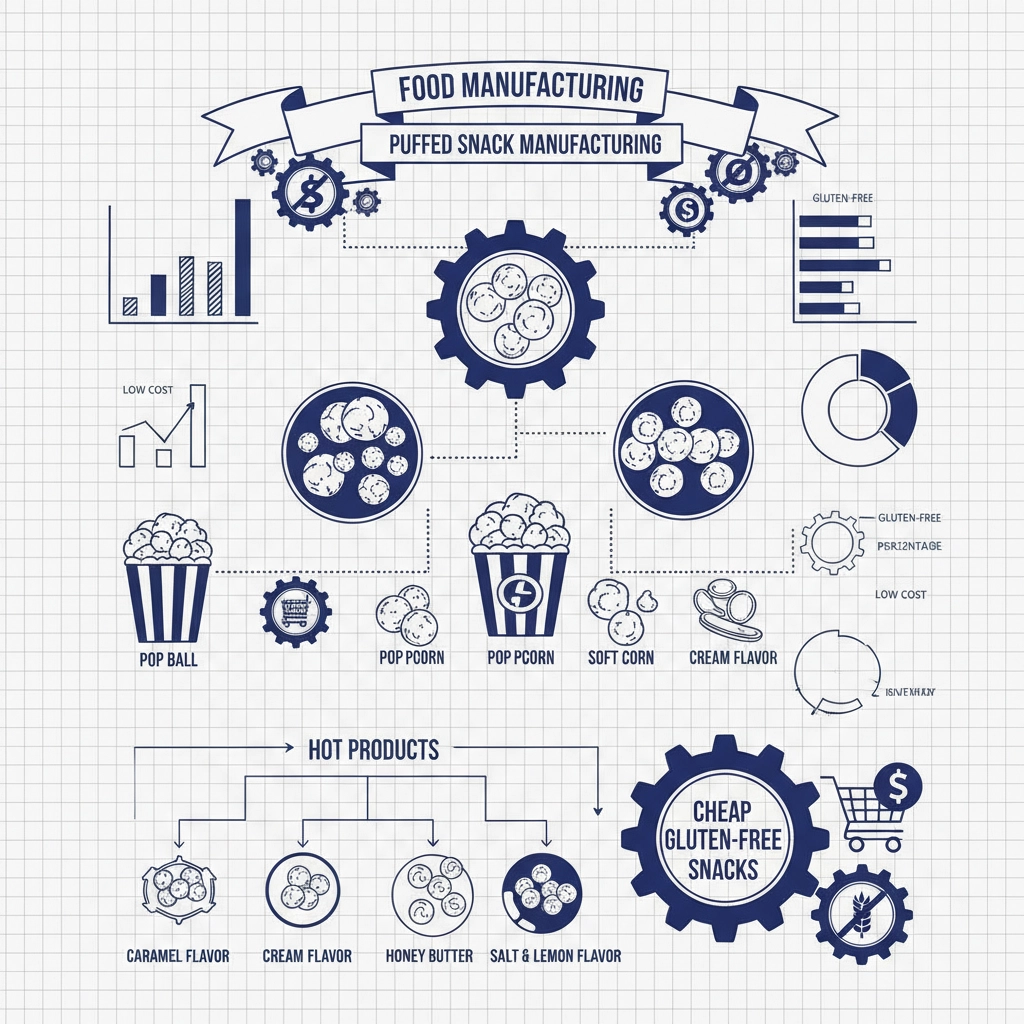
Production Efficiency Comparison for Gluten-Free Snacks
Global Applications and Market Use Cases
The versatility of cheap gluten free snacks allows them to be integrated into various global sectors. In the education sector, for instance, schools in North America and Europe are increasingly stocking puffed corn snacks in vending machines to provide inclusive options for students with allergies without increasing school catering budgets.
Furthermore, in remote industrial zones or disaster relief operations, these snacks serve as a high-energy, shelf-stable food source that is safe for a broad range of dietary needs. Because they are lightweight and calorie-dense, they are ideal for rapid deployment in areas where fresh, gluten-free food is unavailable.
Long-Term Value and Consumer Trust
The long-term value of cheap gluten free snacks extends beyond the price tag; it is rooted in reliability and trust. When a manufacturer consistently delivers a product that is certified gluten-free and tastes consistent, they build a loyal customer base that values safety as much as affordability.
Emotional satisfaction plays a huge role here. For a person with celiac disease, the ability to enjoy a "normal" snack like popcorn in Cream or Honey Butter flavor without fear of contamination provides a sense of dignity and normalcy. This psychological benefit, coupled with logical cost savings, creates a powerful brand bond.
Moreover, the sustainability of using corn—a crop that can be grown at scale with improving ecological footprints—means that these snacks are not only affordable today but are viable for future generations, aligning with global goals for food security and sustainability.
Future Innovations in Gluten-Free Snacking
Looking ahead, the industry is moving toward "clean label" cheap gluten free snacks. This involves replacing artificial flavor enhancers with natural extracts and utilizing digital transformation in the factory to reduce waste. Automation and AI-driven supply chain management are expected to drive prices even lower while increasing quality control.
We are also seeing a trend toward nutritional fortification. Future versions of puffed corn and Pop Balls may be infused with plant-based proteins or vitamins, turning a simple budget snack into a functional food. This evolution ensures that "cheap" doesn't just mean affordable, but "high value" in terms of health benefits.
As green energy is integrated into manufacturing plants, the carbon footprint of producing these snacks will drop, making them an eco-friendly choice for the conscious consumer. The convergence of technology, sustainability, and nutrition will define the next era of gluten-free snacking.
Comparative Analysis of Gluten-Free Snack Variants
| Product Variant |
Production Cost |
Consumer Appeal |
Market Accessibility |
| Pop Ball (Plain) |
Very Low |
Medium |
High |
| Popcorn Caramel |
Medium |
Very High |
High |
| Popcorn Cream |
Medium |
High |
Medium |
| Salt & Lemon Corn |
Low |
High |
High |
| Honey Butter Corn |
Medium |
Very High |
Medium |
| Soft Corn Puffs |
Low |
Medium |
High |
FAQS
Yes, as long as they are produced in a certified gluten-free facility. The cost-effectiveness of our cheap gluten free snacks comes from using naturally gluten-free corn and efficient processing, not by compromising on safety standards or cross-contamination protocols.
Caramel and Honey Butter flavors generally lead in consumer preference due to their indulgent taste, but Salt & Lemon is rapidly gaining popularity as a savory, budget-friendly option for health-conscious snackers.
We achieve affordability through vertical integration—sourcing corn directly and utilizing high-speed extrusion technology. By reducing the "specialty food" markup and focusing on high-volume production, we can offer premium quality at a lower price point.
Not at all. By using advanced moisture-barrier packaging and optimized popping techniques, our budget-friendly snacks maintain their crunch and flavor for months, making them ideal for bulk purchase and long-term storage.
Absolutely. Our production model is designed for scalability. We provide wholesale options for distributors, schools, and retailers looking to provide high-quality cheap gluten free snacks to their customers.
By removing gluten, these snacks are easier to digest for many people. Furthermore, our use of corn and natural flavorings reduces the need for the complex fillers often found in processed wheat snacks, offering a cleaner alternative.
Conclusion
The accessibility of cheap gluten free snacks represents a significant victory for both consumer health and market inclusivity. By combining the natural properties of corn with advanced manufacturing techniques, the industry has successfully decoupled "gluten-free" from "expensive," providing a wide array of flavors—from savory Salt & Lemon to sweet Caramel—that cater to diverse palates without financial burden.
As we move forward, the integration of sustainable sourcing and nutritional fortification will only increase the value of these products. For distributors and consumers alike, the goal remains clear: ensuring that dietary safety is a right, not a luxury. We invite you to explore our range of affordable, high-quality puffed snacks today. Visit our website: www.indiampopcorn.com