The global snack market is witnessing a significant shift toward "therapeutic snacking," where the sensory experience of texture and flavor is leveraged to enhance consumer mood. Within this trend, caramel popcorn products have evolved from simple cinema treats into sophisticated confectionery-grade snacks that require precise thermal engineering to maintain crispness and flavor stability.
The primary technical challenge for manufacturers lies in the application of caramel coatings without compromising the popcorn's cellular structure. Traditional frying methods often introduce excessive trans-fats and degrade the nutritional profile, leading the industry to explore advanced baking and low-temperature processing techniques to achieve the desired "crunch" while meeting modern health standards.
This analysis examines the manufacturing evolution of gourmet popcorn, focusing on the transition toward low-temperature baking and the impact of raw material selection on final product quality. For those evaluating bulk sourcing, understanding these technical parameters is key to selecting high-performance caramel popcorn products that ensure shelf-life stability and consumer satisfaction.


The "18-minute low-temperature baking process" represents a critical departure from high-heat flash frying. By maintaining a controlled thermal environment, manufacturers can lock in the nutrition of the corn while preventing the caramel from scorching, which would otherwise introduce bitter notes and degrade the product's visual appeal.
This precise timing ensures that the moisture content is reduced to a critical threshold, creating a crystalline sugar shell that protects the internal airy structure of the popcorn. This engineering approach is what allows for a non-fried, low-calorie profile without sacrificing the traditional crispy mouthfeel.
The quality of caramel popcorn products is fundamentally determined by the synergy between the kernel and the coating. The use of non-GMO mushroom corn is essential; its spherical expansion pattern provides a larger surface area for the caramel to adhere to, ensuring a more uniform flavor distribution compared to butterfly-shaped kernels.
Complementing the corn, the integration of high-quality maltose syrup and premium imported caramel creates a balanced sweetness profile. Furthermore, the transition to green-healthy vegetable oils, such as those extracted from palm kernels, minimizes trans-fat content and enhances the product's stability against oxidative rancidity during storage.
From a technical perspective, these raw materials are selected not only for taste but for their chemical interaction during the baking process. The viscosity of the maltose syrup determines the thickness of the coating, which directly affects the "crunch" factor and the overall caloric density of the final snack.
Achieving a consistent coating on an irregular surface like popped corn requires advanced automatic production lines. The process involves a precise spraying or tumbling mechanism where the caramel is applied at a specific temperature to ensure it flows into the crevices of the kernel before setting.
This structural integrity is further supported by certifications such as BRCGS and ISO22000, which ensure that the production environment remains free of contaminants that could trigger premature degradation of the sugar shell.
Evaluating the performance of gourmet popcorn involves analyzing several normalized metrics, including coating uniformity, crispness retention, and flavor intensity. In professional B2B assessments, these factors are weighed against the shelf-life stability, typically targeting a 7-month window for international export.
The following assessment illustrates the relative performance of different production methods based on an engineering rating system, comparing traditional frying against modern low-temperature baking.
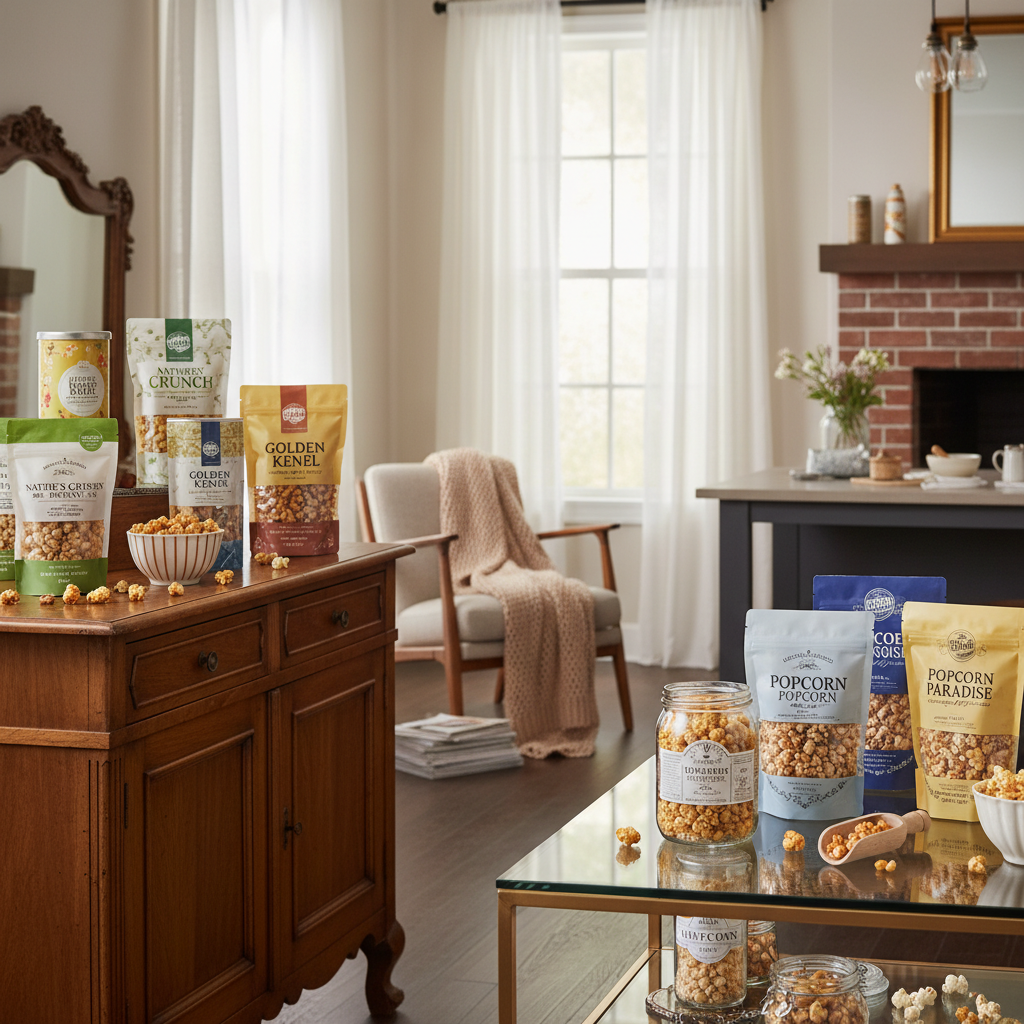
For wholesalers and retailers, the packaging configuration of caramel popcorn products is as critical as the product itself. To prevent kernel breakage during transit, specialized containers such as 118g barrels are utilized, which provide structural support and an airtight seal to maintain the internal atmosphere.
In high-traffic environments like theaters, airports, and stadiums, the requirement shifts toward convenient, single-serve packaging (18g or 40g) that preserves freshness. B2B buyers must ensure that the supplier can provide OEM flexibility and consistent MOQ standards (e.g., 36 cartons) to match their supply chain velocity and inventory turnover.
The trajectory of the puffed food industry is moving toward "intelligent manufacturing," aligning with Industry 4.0 standards. This involves the integration of real-time sensors in the baking process to adjust temperature and humidity dynamically, ensuring that every batch of popcorn meets a strict specification for expansion and coating thickness.
Furthermore, there is an increasing demand for functional snacks. We anticipate a trend where the base corn is augmented with superfoods or the caramel is replaced with low-glycemic index sweeteners, maintaining the sensory appeal of caramel popcorn while catering to diabetic-friendly or keto-oriented consumer segments.
As global export channels expand into the USA, UK, and Southeast Asia, the focus will shift toward localized flavor profiles. The ability to rapidly prototype and scale new flavors while maintaining the 18-minute baking standard will be the key competitive advantage for head brands in the category.
Selecting the right supplier for gourmet popcorn requires a balanced evaluation of certifications, production capacity, and technical specifications. A focus on Gluten-Free, Non-GMO, and Trans-Fat Free attributes is no longer optional but a baseline requirement for entry into premium retail channels.
Buyers should evaluate the packaging styles based on their target demographic: family-sized barrels for home consumption and small bags for impulse purchases in CVS or vending machines. The shelf life of 7 months provides a critical buffer for international logistics and distribution.
The table below provides a comparative framework for evaluating different configuration profiles based on common industrial requirements.
| Configuration Type | Production Process | Target Use Case | Key Performance Factor |
|---|---|---|---|
| Standard Retail | Low-Temp Baking | Hypermarkets / CVS | Coating Uniformity |
| Premium Gourmet | Low-Temp Baking | Theaters / Airports | Sensory Crunch |
| Family Package | Low-Temp Baking | E-commerce / Home | Volume Stability |
| Health-Oriented | Non-Fried / Low-Cal | Health Stores | Trans-Fat Free |
| OEM Custom | Patent Baking Tech | Private Label | Flavor Versatility |
| Industry Baseline | Traditional Frying | Generic Markets | Cost Efficiency |
The 18-minute low-temperature baking process prevents the thermal degradation of nutrients and avoids the oxidation associated with high-temperature frying. Technically, it allows for the slow evaporation of moisture, which creates a more stable crystalline structure in the caramel coating. This results in a product that is non-fried, lower in calories, and possesses a superior, long-lasting crispness compared to traditional methods.
Mushroom corn pops into a round, spherical shape, whereas butterfly corn expands into irregular, wing-like shapes. For caramel-coated products, mushroom corn is preferred because its smooth surface allows for a more uniform distribution of the caramel glaze. This prevents the "pooling" of sugar in the crevices of butterfly corn, which can lead to inconsistent flavor and a higher risk of breakage during packaging.
Shelf life is maintained through a combination of low residual moisture (achieved during baking) and high-barrier packaging. The use of barrels or sealed bags prevents oxygen and moisture ingress. Additionally, using stable vegetable oils and the specific sugar-glass state of the caramel prevents the product from becoming chewy or rancid, provided it is stored in a cool, dry environment.
Yes, production facilities adhering to the highest standards typically hold certifications such as BRCGS, FDA, HALAL, and ISO22000. These certifications ensure that raw material sourcing, production hygiene, and final product testing meet global safety requirements, making them suitable for export to stringent markets like the USA, UK, Japan, and Korea.
Modern automated production lines are designed for flavor versatility. By adjusting the syrup composition and the spraying phase, manufacturers can offer a variety of profiles, including Caramel, Cream, Honey Butter, and Wasabi Seaweed. OEM services allow B2B buyers to customize flavor intensity and packaging styles to align with their specific brand identity and target market preferences.
Buyers should prioritize three key areas: technical capability (e.g., baking vs. frying), certification status (BRCGS/FDA), and supply chain reliability (MOQ and capacity). It is essential to verify the raw material source (Non-GMO) and the ability of the manufacturer to maintain consistency in coating thickness and kernel integrity across large-scale shipments.
The transition from traditional fried snacks to baked, low-temperature processed popcorn reflects a broader industry move toward health-conscious indulgence. By integrating mushroom corn, non-GMO materials, and precision baking, manufacturers can deliver a product that satisfies the "therapeutic snack" demand without compromising on nutritional integrity or shelf stability.
For procurement professionals, the key to long-term success lies in partnering with manufacturers who utilize Industry 4.0 standards and hold recognized global certifications. Choosing high-performance caramel popcorn products ensures that the final consumer receives a consistent, premium experience that drives repeat purchases and brand loyalty.